The Physical Conjuring of Life: Frame-by-Frame Tactility
In the vast pantheon of cinematic arts, no medium is more fundamentally alchemical, tactile, or labor-intensive than stop-motion animation. While traditional hand-drawn cel animation translates graphic illusions onto transparent acetate sheets, and modern computer graphics manipulate ethereal mathematical coordinate arrays within virtual processors, stop-motion animation confronts the unforgiving, stubborn physical universe directly. It is an art form rooted in sculpture, metallurgical fabrication, ball-and-socket engineering, textile miniature tailoring, and delicate lighting physics. A stop-motion animator does not merely illustrate movement; they inhabit the role of a microscopic deity, stepping onto physical miniature soundstages to manipulate physical matter one twenty-fourth of a second at a time.
The historical emergence of stop-motion animation was born from a curious convergence of natural science, entomology, and Victorian stage illusionism. At the dawn of the twentieth century, early motion picture pioneers such as Georges Méliès, Segundo de Chomón, and J. Stuart Blackton discovered the ‘stop-action’ substitution trick—stopping the camera, altering an actor or object in front of the lens, and restarting the crank to create magical disappearances. Yet these early trick films treated the camera pause as an occasional theatrical magic trick rather than a sustained method of character performance.
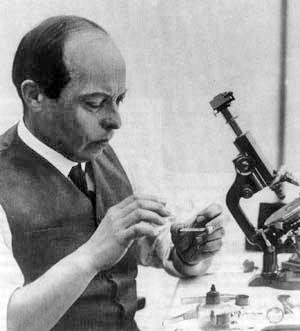
The true conceptual birth of stop motion as an expressive narrative medium occurred through the visionary breakthroughs of two monumental pioneers working on opposite sides of the globe: the Russian-Polish entomologist and visual artist Władysław Starewicz (better known by his French moniker Ladislas Starevitch) and the American sculptor, athlete, and special effects genius Willis Harold O’Brien. Together, Starevitch in Eastern Europe and O’Brien in Hollywood transformed inert armatures of wire, clay, leather, and taxidermy into living, breathing, tragic entities that forever expanded the dramatic boundaries of cinema.
🪲 Scientific Genesis: Starevitch’s Battle of the Stag Beetles (1910)
In 1910, while serving as Director of the Museum of Natural History in Kaunas, Lithuania, Ladislas Starevitch attempted to film a scientific documentary depicting the nocturnal mating battles of live stag beetles (Lucanus cervus). Whenever he engaged the intense incandescent arc lamps required for film exposure, however, the beetles immediately retreated into dormant catatonia. Undeterred, Starevitch meticulously dissected deceased beetle specimens, wired their jointed legs and mandibles with delicate wax-sealed steel articulations, and animated them frame by frame under his lens. Audiences and scientific academies were so completely baffled by the resulting footage that many critics believed Starevitch had miraculously trained live insects to duel like Russian gladiators.
Ladislas Starevitch: The Poetic Entomologist and Fable Weaver
Following his entomological experiments, Ladislas Starevitch recognized that frame-by-frame puppet manipulation possessed immense narrative and satirical power. Between 1911 and 1913, working for the visionary Russian film producer Aleksandr Khanzhonkov in Moscow, Starevitch created a series of astonishing, surreal animated fables, most notably ‘The Cameraman’s Revenge’ (Mest kinematograficheskogo operatora, 1912) and ‘The Grasshopper and the Ant’ (Strekoza i muravey, 1913).
‘The Cameraman’s Revenge’ remains one of the crowning masterworks of early world cinema. A savage, witty parody of bourgeois Russian romantic melodramas, the film features an ensemble cast of taxidermied insects embroiled in marital infidelity: Mr. Beetle frequents a decadent Parisian cabaret where he conducts a scandalous affair with a seductive dragonfly courtesan, unaware that a spurned grasshopper cameraman is filming their illicit rendezvous through a hotel keyhole and later projects the scandalous footage in a public cinema before Mrs. Beetle. Starevitch’s control over insect anatomy was uncanny: beetles operated miniature 35mm cameras, drove motorized carriages, and slumped with drunken, existential remorse with astonishing biological nuance.
Following the chaos of the Bolshevik Revolution of 1917, Starevitch fled Russia, eventually establishing an independent family atelier in Fontenay-sous-Bois outside Paris. There, working alongside his wife Anna and daughter Irène, Starevitch developed elaborate character puppets constructed from carved pearwood, flexible wire armatures, stitched kidskin leather, and human hair. In masterpieces such as ‘The Mascot’ (Fétiche Mascotte, 1933) and the monumental feature-length ‘The Tale of the Fox’ (Le Roman de Renard, 1937), Starevitch pushed stop-motion lighting, atmospheric depth, and puppet expressive emotional range to heights that remained unequaled for decades.
The Technical Architecture of Starevitch’s Expressive Puppets
Starevitch’s puppets were miracles of micro-mechanical engineering. Unlike rigid wooden marionettes, his figures were designed to convey fleeting, nuanced human psychological emotions. For ‘The Tale of the Fox’, Starevitch constructed character armatures featuring interchangeable lead-and-paraffin facial masks:
- Micro-Articulated Facial Mechanics: The fox character possessed dozens of subtle, interchangeable snout and eyebrow modules that could be swapped or molded between exposures, allowing him to sneer, wink, whisper, and express calculating deceit.
- Tactile Hair and Fur Control: To prevent the notorious ‘fur-boiling’ phenomenon—where an animator’s fingers inadvertently crush and shift real animal fur, causing it to visually vibrate and crawl erratically on screen—Starevitch treated rabbit and badger pelts with specialized gum arabic solutions, locking the hairs into sculpted, wind-blown waves.
- Atmospheric Chiaroscuro Lighting: A master cinematographer, Starevitch rejected flat, bright lighting. He employed miniature, focused pin-spots, mirrored reflectors, and cigarette smoke blown across miniature sets to create moody, German Expressionist chiaroscuro lighting that bathed his gothic fairy tales in palpable atmospheric dread.
| Pioneer / Auteur | Active Era | Primary Material Innovation | Signature Masterwork | Historical & Aesthetic Impact |
|---|---|---|---|---|
| Ladislas Starevitch | 1910–1955 | Taxidermied insects, kidskin leather, paraffin face masks | ‘The Cameraman’s Revenge’, ‘The Tale of the Fox’ | Pioneered character psychology, satirical fables, and miniature cinematic lighting |
| Willis Harold O’Brien | 1915–1955 | Machined steel ball-and-socket armatures, sponge latex flesh | ‘The Lost World’ (1925), ‘King Kong’ (1933) | Father of cinematic creature effects; integrated stop motion with live action |
| Ray Harryhausen | 1947–1981 | Dynamation split-screen rear projection, cast latex | ‘The 7th Voyage of Sinbad’, ‘Jason and the Argonauts’ | Democratized fantasy monster cinema; master of sword-fight choreography |
| George Pal | 1934–1950 | Replacement animation with thousands of carved wooden figures | ‘Puppetoons’ series, ‘Tulips Shall Grow’ | Pioneered rigid replacement technique and vivid Technicolor stop motion |
Willis O’Brien and the Industrialization of Monster Cinema
While Starevitch operated as an artisanal European fabulist, an American visionary was preparing to unleash stop-motion animation upon the grandest cinematic stages of Hollywood. Born in Oakland, California, Willis Harold O’Brien began his career as an athlete, cowboy, marble carver, and political cartoonist for the San Francisco Daily News. In 1915, experimenting with crude modeling clay wrapped over wire armatures, O’Brien created a series of whimsical prehistoric comedy shorts, including ‘The Dinosaur and the Missing Link’, which caught the attention of Thomas Edison’s studio.
O’Brien’s monumental historical breakthrough arrived in 1925 with First National Pictures’ adaptation of Sir Arthur Conan Doyle’s ‘The Lost World’. Directed by Harry O. Hoyt, ‘The Lost World’ was the first feature film in cinema history to feature a vast menagerie of stop-motion dinosaurs interacting believably with live-action human actors in a dense Amazonian plateau. O’Brien animated over fifty prehistoric beasts—Allosaurs, Brontosaurs, Triceratops, and Pterodactyls—staging visceral territorial duels, explosive volcanic eruptions, and an iconic climactic sequence where a rampaging Brontosaurus escapes onto the crowded streets of London, smashing Westminster Bridge under its titanic weight.
When Conan Doyle screened test footage of O’Brien’s animated dinosaurs at a formal banquet of the Society of American Magicians in New York in 1922—without explaining how the footage was produced—the audience, including the legendary master escapologist Harry Houdini, was utterly confounded. The New York Times reported on its front page the following morning: ‘Conan Doyle Shows Moving Pictures of Prehistoric Monsters… Whether they are real or fakes, they are monsters of the night of time, walking the earth before human eyes!’.
🦍 Engineering Triumph: The Ball-and-Socket Armature of King Kong (1933)
For RKO’s 1933 masterpiece ‘King Kong’, master machinist Marcel Delgado constructed four identical 18-inch-tall armatures engineered from heat-treated chrome-vanadium steel. Featuring dual ball-and-socket joints, tension screws, and interlocking gear plates, the internal skeleton mimicked real primate musculature. Delgado sculpted muscles from layered sponge rubber and cotton batting, skinned the puppet in genuine Argentine rabbit fur, and installed a miniature pneumatic rubber bladder inside Kong’s chest that O’Brien inflated via a rubber tube between frames to simulate heavy, panting respiration.
The Technical Architecture of King Kong (1933): Compositing Impossible Worlds
The monumental cultural and technological triumph of ‘King Kong’ (1933), co-directed by Merian C. Cooper and Ernest B. Schoedsack with visual effects orchestrated by Willis O’Brien, stands as one of the supreme achievements in cinematic history. Produced during the absolute nadir of the Great Depression, Kong did not merely save RKO Pictures from imminent financial liquidation; it invented the modern cinematic visual effects blockbuster.
The core challenge confronting O’Brien was spatial scale and optical compositing. How could an eighteen-inch metal-and-fur puppet appear sixty feet tall, fighting prehistoric monsters atop Skull Island while holding a live, screaming Fay Wray in the palm of its hand? O’Brien and his optical technician Linwood Dunn solved this through a breathtaking symphony of multi-layered optical techniques:
- Miniature Rear Projection: O’Brien cut miniature rectangular windows into the physical miniature sets, mounting a translucent ground-glass screen behind the puppet. A synchronized 35mm projector cast previously recorded live-action footage of Fay Wray screaming, frame by frame, onto this tiny screen. O’Brien then animated Kong’s hand directly adjacent to the projected human actor, achieving real-time interaction within a single camera exposure.
- The Dunning Two-Color Traveling Matte Process: Developed by C. Dodge Dunning, this process utilized blue-and-yellow dyed film stocks and complementary sodium-vapor lighting to photograph human actors in the studio and optically composite them into miniature animated jungle environments without telltale black matte lines.
- Multi-Plane Glass Matte Paintings: Master artists Mario Larrinaga and Byron Crabbe painted dense, lush, Gustave Doré-inspired primordial jungles across multiple sheets of heavy plate glass. O’Brien placed the stop-motion dinosaur miniatures between these glass layers, creating breathtaking, atmospheric optical depth that made Skull Island feel ancient, damp, and infinite.
The Tragic Humanity of the Monster: O’Brien’s Character Acting
What elevated ‘King Kong’ from a sensational creature feature into an enduring tragic myth was Willis O’Brien’s profound genius as a character actor. Kong was not a mindless engine of destruction; he was a lonely, proud, bewildered monarch ripped from his ancestral kingdom and thrust into a hostile industrial civilization.
In the quiet, tender moments on Skull Island, O’Brien animated Kong inspecting Fay Wray with childlike curiosity: sniffing his fingers after gently touching her garment, playfully tickling her, and defending her to the death against a terrifying Tyrannosaurus rex. In the iconic climax atop the Empire State Building, as military biplanes riddle Kong’s chest with machine-gun fire, O’Brien showed Kong gently setting Ann Darrow safely onto a stone ledge, touching his chest wounds with trembling disbelief, gazing mournfully at his bloody hand, and slumping off the skyscraper in tragic defeat. O’Brien proved that a steel armature covered in rabbit fur could evoke more genuine human tears than the most celebrated Hollywood screen stars.
The European Avant-Garde and Puppet Surrealism
Ladislas Starevitch’s French exile during the 1920s and 1930s placed him in direct dialogue with the flourishing Parisian avant-garde art movements, including Surrealism, Dadaism, and Constructivism. While Hollywood pursued commercial family entertainment, Starevitch embraced the uncanny, dreamlike psychology of puppetry.
In ‘The Mascot’ (Fétiche Mascotte, 1933), a stuffed dog made of discarded rags embarks on a nightmarish urban odyssey through the decadent underworld of Paris to retrieve an orange for a dying child. During an infamous devil’s banquet sequence, Starevitch animates dancing skeletons, roasted chickens that sprout legs and play banjos, and monstrous grotesque masks with terrifying, fluid kinetic energy. Starevitch understood that puppet animation has an inherent affinity with the subconscious mind: because a puppet is an inanimate corpse brought to artificial life, it evokes Sigmund Freud’s concept of ‘Das Unheimliche’ (the uncanny), oscillating between childhood innocence and existential dread.
| Stop Motion Pioneer | Era & Nationality | Primary Mechanical Innovation | Key Thematic Contribution |
|---|---|---|---|
| Segundo de Chomón | 1902–1912 (Spanish) | Early stop-action trick photography, table animation | Transformed stage magic tricks into photographic cinema illusions |
| Ladislas Starevitch | 1910–1955 (Polish-Russian) | Taxidermy, ball-socket lead joints, wax masks | Pioneered character empathy, gothic dark fables, and adult political satire |
| Willis O’Brien | 1915–1955 (American) | Machined chrome-steel ball sockets, Dunning optical mats | Father of Hollywood cinematic creature effects and monster tragedy |
| Ray Harryhausen | 1947–1981 (American) | Dynamation split-screen rear projection, foam latex | Democratized fantasy monster mythology and dynamic swordfight choreography |
The Enduring Heritage of the Stop-Motion Pioneers
Willis O’Brien’s triumph on ‘King Kong’ earned him lifelong adoration from cinema historians, but his later career was marred by heartbreak, personal tragedy, and studio cancellations. In 1949, O’Brien received the Academy Award for Best Visual Effects for ‘Mighty Joe Young’, a film on which he mentored a young, passionate student who would carry the torch of dimensional animation into the stratosphere: Ray Harryhausen.
The alchemical legacy of Ladislas Starevitch and Willis O’Brien remains the foundation of all physical creature effects in world cinema. Long before computers generated synthetic pixels, these two titans demonstrated that true artistic magic resides in the physical contact between the human hand and the material world. By pouring their spirit, sweat, and patience into inanimate armatures, Starevitch and O’Brien proved for all time that an artist can conquer gravity, resurrect extinct leviathans, and breathe an immortal soul into the cold, silent matter of the physical earth.