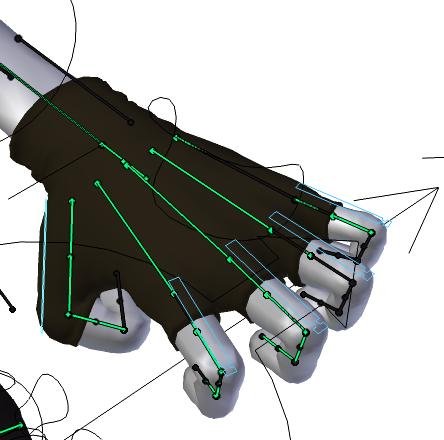
The Invisible Skeleton: The Hidden Engine of Modern 3D Animation
When audiences sit in darkened movie theaters or watch television screens, marveling at the breathtaking performances of modern digital characters—such as Elsa singing atop an icy mountain in ‘Frozen’, Gollum debating his fractured identity in ‘The Lord of the Rings’, or Thanos executing his tragic cosmic philosophy in ‘Avengers: Infinity War’—their eyes naturally gravitate toward the visible exterior surface: the delicate skin textures, the glistening eyes, the flowing hair, and the emotive facial expressions. Yet what virtually no spectator ever sees is the colossal, hyper-complex masterpiece of mechanical, mathematical, and anatomical engineering concealed immediately beneath that digital skin: the digital character rig.
In the industrial architecture of 3D computer animation, a static polygonal model created by a digital sculptor is fundamentally an inert, paralyzed digital statue. It possesses no inherent capacity for movement, flexion, or organic deformation. If an animator were to attempt to move a raw 3D mesh by manually selecting and translating its hundreds of thousands of individual polygonal vertices frame by frame, creating even a three-second walking cycle would require months of agonizing, mathematically impossible labor. The discipline that bridges the static sculptural mesh and the expressive character performance is ‘Character Rigging’.
Operating at the demanding intersection of computational biomechanics, linear algebra, software scripting, and anatomical sculpting, character riggers are the unsung structural architects of digital cinema. They construct a sophisticated internal hierarchy of digital bones, joints, mathematical constraints, and mechanical controllers, meticulously painting skin-weight deformation fields and scripting kinematic algorithms that allow character animators to manipulate complex biological entities with intuitive, fluid grace. Without the invisible science of rigging, the modern digital animation industry would instantly grind to a paralyzed halt.
🦴 Technical Milestone: The Evolution of Rigging Complexity
In 1995, Woody in Pixar’s ‘Toy Story’ possessed approximately 712 animation control sliders, with only 58 controls dedicated to his rigid plastic face. By 2019, on Pixar’s ‘Toy Story 4’, Woody’s internal anatomical rig had expanded to over 8,000 independent controls, featuring complex multi-layered facial muscle solvers, dynamic cloth deformers, and anatomical volume-preservation algorithms that allowed his eyebrows, pupils, and cheeks to execute microscopic dramatic acting.
The Skeletal Hierarchy and Mathematical Kinematics (FK vs. IK)
The foundational bedrock of any digital character rig is the skeletal hierarchy—a parent-child tree of mathematical coordinate systems (transform matrices) commonly termed ‘joints’ or ‘bones’. When a parent joint rotates, all of its descendant child joints naturally inherit that spatial rotation. The mathematical methods utilized to calculate the orientation and position of these skeletal joints fall into two distinct, competing kinematic frameworks:
- Forward Kinematics (FK): In an FK system, joint rotations propagate strictly down the hierarchical chain from parent to child: the shoulder rotates the upper arm, which rotates the elbow, which rotates the wrist, which moves the hand. FK provides the animator with total, exquisite control over the graceful, sweeping natural arcs of a limb. It is the ideal mathematical mode for unconstrained airborne actions, such as swimming, gesturing in mid-air, swinging a sword, or floating through zero gravity.
- Inverse Kinematics (IK): In an IK system, the mathematical calculation is reversed. The animator does not manipulate individual joint angles; instead, they position an ‘IK handle’ or goal effector located at the terminus of the chain (such as the character’s foot or palm). A mathematical solver—utilizing trigonometric algorithms such as Cyclic Coordinate Descent (CCD) or the Jacobian Matrix—instantly calculates the precise rotational angles required for the hip, knee, and ankle to reach that goal. IK is absolutely indispensable for grounded contact mechanics, ensuring that an animated character’s feet remain locked solidly onto the floor without slipping or sliding during a walk cycle.
- Seamless FK/IK Blending: Because animators require both arcs and ground stability within a single scene, modern riggers engineer complex ‘FK/IK blend switches’. A single character limb is built with three overlapping skeletal chains (an FK chain, an IK chain, and a driving bind chain), linked by a linear interpolation slider that allows an animator to smoothly transition a character’s arm from a grounded push-up (IK) into a soaring aerial punch (FK) without popping.
The Art and Science of Weight Painting and Skin Deformation
Once the mathematical skeletal hierarchy is constructed, it must be bound to the external polygonal character mesh through a process known as ‘Skin Binding’ or ‘Skinning’. The rigger must define how much influence each internal bone exerts over every individual vertex on the character’s surface:
This is achieved through ‘Weight Painting’. Operating like a digital painter clutching a stylus over a tablet, the rigger paints influence values ranging from 0.0 (zero influence) to 1.0 (100% influence) across the character’s geometry. If a vertex on a character’s bicep has a weight value of 0.8 assigned to the upper arm bone and 0.2 assigned to the forearm bone, it will deform with a smooth, natural bend when the elbow flexes. Flawed weight painting produces horrifying visual defects: joints collapsing into flat, pinched creases (the dreaded ‘candy-wrapper effect’), shoulders caving in, and clothing tearing open to reveal empty internal geometry.
| Rigging Component / Subsystem | Governing Mathematical Paradigm | Primary Functional Responsibility | Typical Animation Failure if Poorly Built |
|---|---|---|---|
| Forward Kinematics (FK) | Euler Angles / Quaternions / Parent Matrices | Rotates joints down the chain; perfect for natural arcs | Limb slips on contact surfaces; robotic straight-line pathing |
| Inverse Kinematics (IK) | Jacobian Inverse / Trigonometric Solvers | Solves joint angles from goal target; perfect for foot contact | Gimbal lock; catastrophic sudden joint flipping/popping |
| Weight Painting (Linear Skinning) | Matrix Vector Weighting Summation: Σ(W_i * M_i) | Binds surface vertices to underlying joint movement | Candy-wrapper joint pinching, skin tearing, volume collapse |
| Dual Quaternion Skinning (DQS) | Dual Quaternion Mathematical Algebra | Preserves organic volume and prevents cross-axis twist collapse | Bulging artifacting at high-angle rotational extremes |
| Blendshapes / Shape Keys | Delta Vertex Position Vectors: P_final = P_base + Σ(ΔP) | Sculpted facial expressions, phonemes, and muscular bulges | Rigid, mask-like facial acting; unnatural linear transitions |
Corrective Blendshapes, PSD, and Anatomical Volume Preservation
Standard linear skinning suffers from a fundamental mathematical flaw: when a joint bends beyond seventy degrees, the polygonal surface naturally collapses inward, destroying the character’s volumetric mass. To resolve this structural defect, modern riggers utilize ‘Pose Space Deformation’ (PSD) and ‘Corrective Blendshapes’.
When a character bends their knee or raises their arm above their head, the rigging software mathematically tracks the joint angle. As the angle crosses a specific rotational threshold, the system automatically activates a corrective sculpted mesh (a delta shape) sculpted by a digital artist. This corrective shape pushes the vertices outward, simulating the realistic bulging of the quadriceps, the wrinkling of skin behind the knee, and the natural stretching of the deltoid muscle across the collarbone. By layering hundreds of corrective blendshapes across a character rig, technical artists reproduce the intricate biomechanical reality of living muscle and bone sliding under flesh.
🎭 Facial Rigging Masterclass: The FACS System and Muscle Solvers
Modern facial rigging is universally built upon the Facial Action Coding System (FACS), developed by psychologists Paul Ekman and Wallace Friesen in 1978. Riggers decompose the human face into forty-six distinct ‘Action Units’ (AUs) corresponding to individual facial muscle contractions—such as AU 1 (Inner Brow Raiser), AU 12 (Lip Corner Puller), and AU 45 (Blink). Modern character rigs combine FACS blendshapes with ribbon-spine nurbs curves and dynamic soft-body tissue solvers, enabling the simulation of micro-expressions down to the individual pore.
The Modular Rigging Architecture: Python Scripting and Automation
In modern industrial animation pipelines, building a high-end character rig entirely by hand is completely unviable. A feature film like ‘Zootopia’ or ‘Spider-Man: Across the Spider-Verse’ features hundreds of unique characters—quadrupeds, birds, reptiles, background crowds, and vehicles—each requiring fully articulated rigs within tight production deadlines.
To scale production, character technical directors (Character TDs) develop sophisticated modular auto-rigging frameworks written in Python. These procedural systems allow a rigger to place simple locator guides at the anatomical landmarks of a character (wrist, elbow, knee, eye), and then execute a script that automatically generates the complete skeletal hierarchy, FK/IK switching systems, spline-IK spinal columns, squash-and-stretch ribbon deformers, and user interface selection pickers in seconds. The Character TD transitions from a manual builder into a software architect, constructing robust, reusable codebases that power entire studio ecosystems.
FEM Muscle Systems and Anatomical Tissue Solvers: The Ziva VFX Revolution
While traditional linear skinning and blendshapes manipulate surface geometry directly, the frontier of high-end creature rigging has transitioned to anatomical Finite Element Method (FEM) physical simulation. Pioneered by software engines such as Ziva VFX, technical artists no longer rig characters as hollow rubber balloons; they construct a complete, anatomically authentic biological creature from the inside out.
The technical rigger models a realistic rigid 3D skeleton, attaches anatomically accurate volumetric muscle geometry with realistic fiber-direction vectors (such as biceps, triceps, and pectorals), wraps the muscles in a fascia membrane layer, and caps it with a dynamic subcutaneous fat and epidermal skin mesh. As the skeletal bones articulate, the software solves the biological physics: muscles automatically contract, bulge, and fire based on exertion; fat jiggles with secondary inertia; and skin slides, bunches, and stretches over the underlying tendons with breathtaking physiological realism. This anatomical approach has become the gold standard for photorealistic creatures in blockbusters like ‘The Lion King’ (2019) and ‘Godzilla vs. Kong’.
Ribbon Spines and Micro-Controllers: The Animator’s Tactile Interface
To provide animators with intuitive, expressive control over non-rigid organic forms—such as spinal columns, tentacles, insect antennae, and facial lips—riggers engineer ‘Ribbon Rigs’. A ribbon rig utilizes a non-uniform rational B-spline (NURBS) surface deformed by a series of locator joints. Because NURBS surfaces possess intrinsic two-dimensional UV parametric coordinates, child joints adhere to the surface without twisting or flipping.
Animators can manipulate global macro-controllers to pose the entire torso, and then grab local micro-controllers to fine-tune individual vertebrae, introducing subtle counter-rotations, s-curves, and breathing expansion. By designing user-friendly on-screen viewport pickers and intuitive color-coded curve controls, the rigger transforms a complex mathematical engine into an expressive digital puppet that responds effortlessly to the animator’s creative touch.
| Rigging Paradigm | Primary Mathematical Mechanism | Computational Overhead | Ideal Industry Application |
|---|---|---|---|
| Linear Blend Skinning (LBS) | Matrix vertex weighting summation | Extremely low (runs at 120fps in real-time game engines) | Real-time video games, mobile apps, background crowd assets |
| Dual Quaternion Skinning (DQS) | Dual quaternion rotation/translation algebra | Low (supported directly in modern GPU hardware shaders) | Prevents volume loss on twisting wrists and ankles in games |
| Pose Space Deformation (PSD) | Sculpted corrective shape blend matrices | Moderate (standard in offline feature 3D animation) | Hero character joints (knees, elbows, shoulders) in Maya |
| FEM Anatomical Muscle (Ziva) | Finite Element Method continuous physics solvers | High (requires offline simulation caches on render farms) | Photorealistic digital doubles, creatures, dinosaurs in VFX blockbusters |
Quaternions vs. Euler Angles: Preventing Gimbal Lock in Rotations
One of the most insidious mathematical traps in 3D character rigging is ‘Gimbal Lock’. Historically, 3D rotations were calculated using Euler angles (pitch, yaw, and roll around X, Y, and Z axes). However, whenever two rotational axes align along the exact same spatial plane (such as pitching an arm up ninety degrees so the X and Z axes coincide), the system loses a degree of freedom. If an animator attempts to rotate the limb across this threshold, the arm snaps violently 180 degrees in a single frame, corrupting the animation data.
To eliminate gimbal lock, modern rigging pipelines employ four-dimensional hyper-complex numbers known as ‘Quaternions’ (invented by Irish mathematician Sir William Rowan Hamilton in 1843). Quaternions represent rotations as a vector axis and an angle of rotation in four-dimensional space, guaranteeing smooth, continuous spherical linear interpolation (SLERP) without rotational axis collapse. By implementing quaternion rotational math within skeletal shoulder and hip ball joints, technical directors ensure that animators can spin, somersault, and twist characters without encountering mathematical artifacts or popping joints.
The ultimate paradox of character rigging is that the greatest rigs in cinema history are precisely those that the audience never notices. If an audience member pauses during a film to think about a skeletal joint, a weight-painting blend, or an inverse kinematic solver, the rig has fundamentally failed. A truly brilliant character rig is a transparent, frictionless conduit of pure emotional expression—an invisible technological instrument that allows the character animator to forget about mathematics and pour their empathy, soul, and storytelling passion directly into the performance.
Character riggers stand as the modern digital descendants of the medieval puppet makers, clockwork horologists, and Victorian doll artisans who spent their lives building intricate brass joints so that a stage showman could make a wooden puppet dance. By mastering the hidden geometry of movement, riggers ensure that the digital characters of today move with the authentic, sacred weight of living beings, touching the hearts of millions across the luminous screens of the modern world.