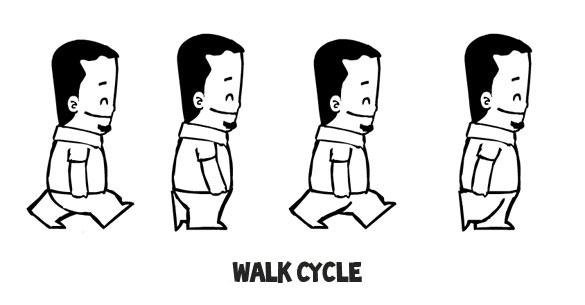
The Sacred Codex of Kinetic Illusion: The Genesis of the Principles
In the expansive history of the visual arts, few technical codifications have exerted as profound, enduring, and universal an influence as the ‘Twelve Basic Principles of Animation’. Articulated in 1981 by legendary master animators Frank Thomas and Ollie Johnston in their seminal opus ‘The Illusion of Life: Disney Animation’, these twelve tenets were not abstract theoretical dogmas invented by detached academic theorists. Rather, they were the hard-won practical discoveries forged across fifty years of intense studio experimentation at the Walt Disney Hyperion and Burbank studios, developed by a brilliant fraternal collective of artists commonly revered as Disney’s ‘Nine Old Men’.
In the late 1920s and early 1930s, the fledgling art of character animation was severely hindered by crude, rubbery mechanics. Characters bounced and gyrated across the screen without physical mass, anatomical resistance, or emotional interiority. Under the demanding, relentless perfectionism of Walt Disney—who famously insisted that his animators discover ‘not how to draw things moving, but how to draw things that feel alive’—the studio systematically decomposed the biomechanics of living organisms. They analyzed how gravity pulls on flesh, how joints pivot, how anticipation signals intent to an audience, and how emotional motivation dictates the speed and elasticity of a physical action.
Today, more than four decades after their formal publication, the Twelve Principles remain the foundational grammar of all moving imagery. Whether an artist is animating traditional hand-drawn graphite on paper, manipulating stop-motion clay armatures under macroscopic camera lenses, keyframing 3D polygonal character rigs in Maya, or designing micro-interactions for modern mobile digital interfaces, these twelve laws provide the universal psychological and physical blueprint that transforms cold graphic geometry into vibrant, empathetic biological life.
📖 Literary Monument: The Illusion of Life (1981)
Published in 1981 by Walt Disney Productions, ‘Disney Animation: The Illusion of Life’ by Frank Thomas and Ollie Johnston has been universally celebrated by animators, directors, and game designers as the supreme ‘Bible of Animation’. In 1999, an international poll of animation professionals conducted by Animation World Network voted it the number one animation book of all time.
The Foundational Physical Principles: Weight, Mass, and Trajectory
The first tier of the Twelve Principles governs the simulation of Newtonian physics, biological inertia, and anatomical volume. Without these physical rules, an animated world feels weightless, floaty, and psychologically unconvincing:
- 1. Squash and Stretch: Universally regarded as the single most critical principle in animation. It asserts that living biological tissue—flesh, muscle, cheeks, and stomachs—distorts dynamically when impacted by gravity, acceleration, or physical collision. However, the supreme golden rule of squash and stretch is the strict preservation of volume: if an animated rubber ball squashes flat against the ground, it must expand proportionally in width so that its total three-dimensional mass remains absolute. If volume is not preserved, the object appears to balloon or shrink rather than distort.
- 2. Anticipation: In the real physical world, muscular action cannot occur instantaneously from a dead standstill. Before a person jumps into the air, they must first crouch down; before a baseball pitcher hurls a fastball, they must wind up their arm backward. Anticipation prepares the audience’s visual cortex for the coming action, telegraphing anatomical intent and generating kinetic tension that makes the subsequent movement feel explosive and believable.
- 3. Staging: Grounded in classical theatrical directing, staging dictates how characters, props, camera angles, and lighting are arranged so that the storytelling idea is unmistakably clear. An animator must eliminate visual clutter, ensuring that an audience’s eye is guided unerringly to the emotional focus of the frame. In 2D silhouette tests, if a character’s action cannot be read clearly as a pure black silhouette, the staging has failed.
- 4. Straight Ahead Action vs. Pose to Pose: The two fundamental methodologies of drawing movement. ‘Straight Ahead’ involves drawing frame 1, then frame 2, then frame 3 sequentially—ideal for unpredictable, chaotic physical phenomena like splashing water, flickering fire, and billowing smoke. ‘Pose to Pose’ involves drawing the extreme storytelling keys first, planning breakdowns, and filling inbetweens—essential for dramatic character acting, structural volume control, and precise musical timing.
Inertia and Continuity: Follow Through, Overlapping Action, and Arcs
Continuing the decomposition of physical mechanics, the subsequent principles address the complex, asynchronous nature of compound movement:
- 5. Follow Through and Overlapping Action: When an animated character comes to a sudden physical halt, different parts of their body stop at different times. The heavy torso stops first, while looser appendages—hair, floppy dog ears, tails, capes, and loose clothing—continue hurtling forward under momentum before settling back (follow through). ‘Overlapping action’ dictates that different body parts move at varying rates, ensuring that a character never moves like a synchronized wooden mannequin.
- 6. Slow In and Slow Out: Physical masses in the real world require time to accelerate from rest and decelerate to a stop due to inertia and friction. In animation, this is achieved by clustering more drawings close to the beginning pose and end pose, with fewer, widely spaced drawings in the middle velocity apex. In modern digital timeline curve editors, this corresponds directly to the Bézier ‘ease-in’ and ‘ease-out’ tangents.
- 7. Arcs: Almost all biological movement in living creatures—the swing of an arm, the turn of a head, the leap of a cat—travels along curved natural arcs dictated by circular skeletal joints and pivot points. If an animator moves a character’s hand along a straight, rigid linear vector, the performance instantly appears mechanical, robotic, and lifeless.
| Number | Principle Name | Core Physical / Psychological Purpose | Classic Example / Application |
|---|---|---|---|
| 01 | Squash and Stretch | Simulate elasticity, flesh mass, and volume conservation | Bouncing rubber ball flattening on impact, expanding horizontally |
| 02 | Anticipation | Prepare audience’s visual attention for impending action | Crouching low before jumping; winding up arm before throwing a punch |
| 03 | Staging | Present an idea so that it is unmistakably clear and readable | Clear character silhouette against uncluttered, contrasting background |
| 04 | Straight Ahead & Pose to Pose | Dynamic spontaneity (Straight Ahead) vs. structured control (Pose) | Exploding fireworks (Straight Ahead) vs. character walking (Pose to Pose) |
| 05 | Follow Through & Overlap | Prevent rigid synchronization; simulate natural momentum and drag | Long cloak billowing forward and settling after character abruptly halts |
| 06 | Slow In and Slow Out | Simulate realistic acceleration and deceleration under friction | Bézier ease curves; clustered frames at key poses with fast middle frames |
| 07 | Arcs | Conform movement to natural circular skeletal joint rotation | Head turns dipping in a graceful shallow U-curve rather than straight line |
| 08 | Secondary Action | Enrich primary action with subtle, reinforcing character nuance | Character swinging arms angrily while whistling nervously with their mouth |
| 09 | Timing | Define physical weight, speed, and emotional psychological mood | Moving a head across 2 frames (startled whiplash) vs. 16 frames (slow sleepy turn) |
| 10 | Exaggeration | Amplify reality to make the emotional essence feel more truthful | Jaws dropping through floors; physical contortions emphasizing raw emotion |
| 11 | Solid Drawing | Maintain 3-point perspective, volume, balance, and weight in 2D | Drawing characters with volumetric depth, avoiding flat symmetrical poses |
| 12 | Appeal | Endow characters with charismatic magnetism, charm, and readability | Pleasing graphic design, readable facial silhouettes, empathetic vulnerability |
The Psychological Principles: Timing, Exaggeration, and Appeal
While the first seven principles govern the physics of the physical universe, the remaining five principles address the emotional, comedic, and psychological connection between the animated character and the human audience. These principles elevate animation from mechanical biomechanics into dramatic theatrical acting:
- 8. Secondary Action: A secondary action is an auxiliary gesture that supports, enriches, and adds emotional depth to the primary action without distracting from it. If a character is walking down a hallway (primary action), they might angrily wipe a tear from their eye, fidget with their watch, or bite their fingernails (secondary action). Secondary action reveals the hidden psychological interiority of the character.
- 9. Timing: Timing is the supreme master of animation. It dictates the number of frames assigned to an action, which fundamentally establishes physical mass and emotional psychology. If a character turns their head from left to right in two frames, they have been struck by a bullet or startled by a ghost; if they turn their head in sixteen frames, they are lazily waking up or thoughtfully scanning a horizon. Same drawing extremes—entirely different physical realities dictated solely by timing.
- 10. Exaggeration: Walt Disney famously cautioned that exaggeration does not mean mindless distortion; it means distilling the dramatic essence of a reality and amplifying it so that it registers with maximum emotional force. If a character is sad, make them more sorrowful than anyone in real life; if a character is angry, make their silhouette radiate tension like a coiled spring. Exaggeration is the heart of theatrical truth.
- 11. Solid Drawing: The mastery of three-dimensional space, volumetric mass, center of gravity, and perspective. A solid drawing possesses depth, weight, and sculptural presence on a flat two-dimensional sheet, avoiding the dreaded ‘twinning’—the visual defect where a character’s left and right sides are mirror images of each other, rendering the pose stiff and lifeless.
- 12. Appeal: Appeal in animation is analogous to charismatic screen presence in live-action cinema. It does not mean merely that a character is pretty or cute; a terrifying villain like Captain Hook or Maleficent possesses immense appeal. Appeal means that the character’s graphic design, proportions, silhouette, and movement exert a magnetic visual pull that compels the audience to keep watching.
💻 Modern Digital Transition: The Principles in 3D CGI and Game Design
When computer graphics emerged in the 1990s, early software engineers believed the Twelve Principles were obsolete artifacts of paper drawing. They quickly discovered that without squash and stretch, digital rigs looked like stiff wooden mannequins, and without anticipation and arcs, robotic inverse kinematics made movements look bizarrely synthetic. Today, leading 3D software suites like Autodesk Maya and Blender feature dedicated tools—motion trail arcs, graph editor tangents, and dynamic squash-and-stretch rig deformers—specifically designed to enforce these 1930s hand-drawn laws.
The Nine Old Men: The Fraternal Fellowship of Master Craft
The codification of these principles was the direct product of Disney’s core animation directors, whom Walt affectionately dubbed his ‘Nine Old Men’ (a playful reference to President Franklin D. Roosevelt’s Supreme Court). Each master brought a unique, specialized artistic temperament that enriched the collective grammar:
- Frank Thomas and Ollie Johnston: The intellectual philosophers of character interiority. Frank specialized in intricate, calculating villainy (Captain Hook, Lady Tremaine), while Ollie brought childlike innocence and tender vulnerability (Thumper, Mowgli, Smee).
- Milt Kahl: The supreme virtuoso draftsman of Hollywood animation. Kahl was celebrated for his fierce, immaculate line control, unmatched anatomical volume, and extraordinary handling of arrogant, aristocratic villains like Shere Khan in ‘The Jungle Book’.
- Ward Kimball: The wild, rebellious satirist. Kimball rejected anatomical realism in favor of explosive visual absurdity, rhythm timing, and musical syncopation, animating Jiminy Cricket, the Cheshire Cat, and the Mad Hatter.
- Marc Davis: The master of graphic design, elegance, and feminine beauty. Davis created the iconic character designs and animation for Cinderella, Aurora, Maleficent, and Cruella de Vil, treating animation as dynamic graphic fashion.
- Eric Larson, John Lounsbery, Wolfgang Reitherman, and Les Clark: Rounding out the fellowship, these masters contributed relentless storytelling momentum, physical weight, comic slapstick, and foundational character consistency across five decades of feature classics.
John Lasseter and the SIGGRAPH 1987 Computer Graphics Manifesto
In 1987, John Lasseter presented a historic paper at the SIGGRAPH computer graphics conference in Anaheim, California, titled ‘Principles of Traditional Animation Applied to 3D Computer Animation’. Up to that moment, computer graphics researchers operated under the assumption that computer animation was purely a problem of mathematical simulation and algorithmic interpolation.
Lasseter systematically deconstructed each of the Twelve Principles, demonstrating how computer programmers and technical directors could apply them within 3D digital software environments. He proved that squash and stretch could be achieved by scaling polygonal lattices while preserving geometric volume, that anticipation could be enforced by adding reverse keyframes before linear translations, and that arcs could be sculpted using 3D spatial Bézier curves. Lasseter’s paper served as the Rosetta Stone that bridged the eighty-year divide between classical Hollywood hand-drawn animation and the emerging digital revolution, providing modern 3D animators with their eternal artistic compass.
| Animation Principle | Classical 2D Hand-Drawn Application (Disney) | Modern 3D Digital CGI Application (Maya / Blender) |
|---|---|---|
| Squash and Stretch | Hand-drawn volumetric distortion preserving cross-sectional area | Lattice deformers, squash blendshapes, volume-preserving scaling |
| Anticipation | Coiled preparatory sketch poses and counter-action drafts | Negative keyframe blocking, anticipation curve dipping on timeline |
| Staging | Clear silhouette drawing against painted watercolor backgrounds | Virtual camera focal length, framing, depth-of-field, lighting hierarchy |
| Arcs | Natural circular curves sketched along anatomical limb paths | 3D motion trail visualization, spatial spline curve manipulation |
| Slow In & Slow Out | Clustered pencil drawings near keyframe extremes on pegs | Bézier tangent handles, ease-in and ease-out velocity curves in Graph Editor |
| Solid Drawing | Mastery of 3-point perspective, foreshortening, and balance | Plausible anatomical rigging, weight distribution, center-of-mass balance |
As the animation industry plunges into the twenty-first century—embracing artificial intelligence, neural motion generation, real-time virtual production, and spatial augmented reality—the Twelve Basic Principles of Animation burn with greater relevance than ever before. Technology, rendering algorithms, and input hardware will continuously evolve, transform, and become obsolete; what was revolutionary in 1995 is trivial today, and what is cutting-edge today will be quaint tomorrow.
Yet human biology, human perception, and the human visual cortex remain fundamentally unchanged. The human eye will always crave the fluid grace of natural arcs, the visceral impact of physical squash and stretch, the suspenseful tension of anticipation, and the empathetic soul of character appeal. By discovering the eternal mechanics of how light and motion touch the human heart, Frank Thomas, Ollie Johnston, and the golden pioneers of the Hyperion studio gifted humanity with a sacred artistic compass that will guide visual storytellers across all mediums for centuries to come.