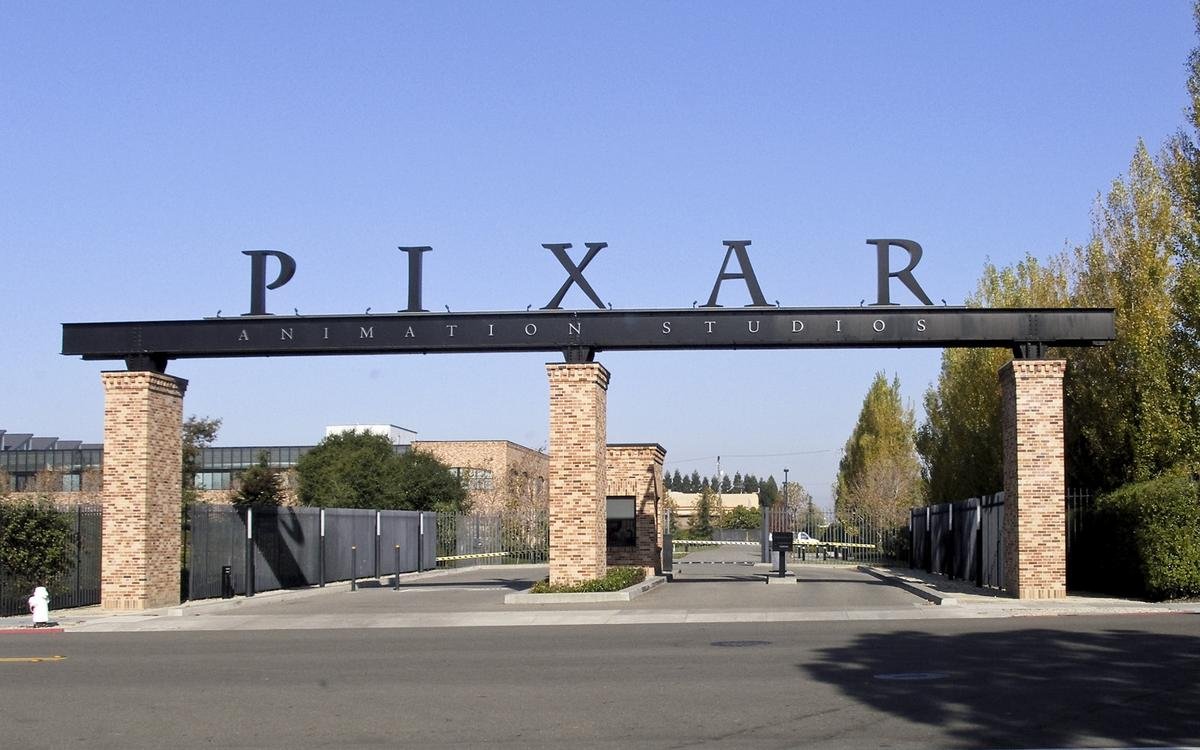
The Convergence of Silicon and Pencil: The Pixar Odyssey
In the expansive history of world cinema, artistic and technological revolutions rarely occur in perfect harmony. More often, revolutionary technology is developed by pragmatic engineers who lack poetic storytelling sensibilities, while brilliant narrative artists remain suspicious of unfamiliar technological tools, dismissing them as cold, sterile threats to human craftsmanship. For decades, computer-generated imagery was caught in this cultural stalemate: computer scientists produced mathematically brilliant but aesthetically soulless geometric demonstrations, while Hollywood animators proudly proclaimed that no computer could ever make an audience laugh or cry.
The miraculous cultural catalyst that shattered this historical impasse was the founding and evolution of Pixar Animation Studios. Born from the extraordinary triumvirate of visionary computer scientist Edwin Catmull, brilliant character animator John Lasseter, and eccentric tech visionary Steve Jobs, Pixar represented the first harmonious, equal-footed marriage between cutting-edge computational science and classical character-driven storytelling. Pixar did not view computers as cost-cutting automation tools designed to replace human artists; rather, they viewed the computer as a magnificent, newly discovered artistic medium—a high-tech technological brush waiting for its Renaissance masters.
This creative crucible culminated on November 22, 1995, with the theatrical release of ‘Toy Story’—the world’s first full-length, 77-minute computer-animated feature film. Directed by John Lasseter, ‘Toy Story’ was a thunderous cultural, commercial, and critical triumph that permanently altered the architecture of the global film industry. Grossing over $373 million worldwide and earning a special Academy Award for Lasseter, ‘Toy Story’ proved incontrovertibly that audiences did not fall in love with pixels, polygons, or rendering power; they fell in love with unforgettable characters, emotional truth, and universal human stories.
💡 Historic Genesis: Steve Jobs and the 1986 Lucasfilm Spin-Off
In February 1986, following his dramatic ouster from Apple Computer, Steve Jobs purchased the Computer Division of Lucasfilm from George Lucas for $5 million in capital plus $5 million in operational investment, officially incorporating it as an independent hardware and software company named Pixar. For nearly a decade, Jobs personally funded Pixar’s multi-million-dollar annual operational deficits out of his private fortune, fiercely protecting Catmull and Lasseter’s creative autonomy until ‘Toy Story’ catapulted the studio into an unprecedented Wall Street IPO in November 1995.
The Creative Triad: Catmull, Lasseter, and the Core Philosophy
To understand the secret of Pixar’s unprecedented winning streak—producing twenty-three consecutive critically acclaimed, box-office-dominating feature films—one must deconstruct the cultural philosophy forged by Ed Catmull and John Lasseter. While traditional Hollywood studios were run by bean-counting executives who treated creative talent as fungible, disposable labor, Pixar operated as an artist-driven academic commune where failure was embraced as an essential prerequisite for innovation:
- Ed Catmull’s Architectural Vision: Catmull established the institutional principle of ‘unfiltered candor’ and psychological safety. He created the legendary ‘Braintrust’—a peer-review council of fellow directors, writers, and storytellers who convened periodically to dissect in-development films with brutal, ego-free analytical honesty, diagnosing structural narrative flaws without executive interference.
- John Lasseter’s Classical Animation Soul: Trained in classical hand-drawn Disney animation at CalArts alongside Brad Bird and Tim Burton, Lasseter was fired from Disney in 1983 for passionately advocating for 3D computer animation on ‘The Brave Little Toaster’. Joining Catmull at Lucasfilm, Lasseter brought the twelve classical Disney principles of animation—squash and stretch, anticipation, appeal, and personality—into the digital domain.
- The Short Film Laboratory: To stress-test their proprietary software before attempting a feature film, Pixar produced a series of dazzling animated short films: ‘The Adventures of André & Wally B.’ (1984), ‘Luxo Jr.’ (1986), ‘Red’s Dream’ (1987), ‘Tin Toy’ (1988), and ‘Knick Knack’ (1989). In 1988, ‘Tin Toy’ won the Academy Award for Best Animated Short Subject, becoming the first computer-generated film in history to win an Oscar.
Luxo Jr. (1986): The Breakthrough of Digital Empathy
At the 1986 SIGGRAPH conference in Dallas, Texas, Pixar unveiled a two-minute short film that stunned the international computer graphics community: ‘Luxo Jr.’. The short featured two ordinary balanced-arm desk lamps playing with an inflated rubber ball. In the hands of a standard computer programmer, the lamps would have been rigid mechanical assemblies executing dry mathematical rotations.
Lasseter, however, infused the inanimate metal objects with heartbreaking biological warmth. By animating the larger parent lamp with patient, mature curiosity and the smaller child lamp with exuberant, hop-happy youthful enthusiasm, Lasseter created an emotional connection that brought the audience of hardened computer scientists to their feet in a roaring standing ovation. When legendary Disney animator Frank Thomas walked up to Lasseter after the screening and asked whether the parent lamp was a mother or a father, Lasseter knew that computer animation had officially arrived: the audience was no longer looking at computer algorithms; they were experiencing living character relationships.
| Pixar Milestone Work | Release Year | Key Character / Story Arc | Technological Innovation | Industry / Academy Milestone |
|---|---|---|---|---|
| Luxo Jr. | 1986 | Parent and child articulated desk lamps | Self-shadowing algorithms, emotional inanimate acting | First CGI short nominated for an Academy Award |
| Tin Toy | 1988 | Tin one-man-band toy fleeing a monstrous baby | Soft-body organic human skin modeling, dynamic cloth | First computer-animated film to win an Academy Award |
| Toy Story | 1995 | Woody and Buzz Lightyear rivalry and friendship | Full-length CGI pipeline, RenderMan Reyes engine | First CGI feature; Special Achievement Academy Award |
| Monsters, Inc. | 2001 | Sulley and Mike Wazowski; child empathy | Fizt physics simulation: 2.3 million dynamic hairs | Solved photorealistic biological fur simulation |
| Finding Nemo | 2003 | Marlin, Dory, and Nemo; fatherly devotion | Volumetric water illumination, subsurface scattering | Highest-grossing animated film of its era; Oscar winner |
| The Incredibles | 2004 | The Parr superhero family; mid-life crisis | Complex human anatomical rigs, muscle dynamics, hair | First Pixar feature with an entirely human cast |
Joe Ranft and the Golden Standard of Pixar Storyboarding
While computer programmers engineered the rendering pipelines, the true narrative heart of Pixar’s Golden Age was head of story Joe Ranft (1960–2005). A veteran of Disney’s 1980s story department, Ranft brought a deep, humane understanding of cinematic character architecture to Pixar, mentoring young directors like Pete Docter and Andrew Stanton.
Ranft believed that an animated film must earn its tears through profound character flaws and emotional transformation. On ‘Toy Story’, Ranft pioneered the methodology of the ‘pitch meeting’ inside the story room: story artists pinned hundreds of hand-drawn paper sketches to giant corkboards and pitched the sequences live, acting out character voices, sound effects, and emotional beats for their peers. If an emotional moment felt unearned or a comedic gag fell flat in the sketch phase, the scene was torn off the wall and discarded before a single digital polygon was ever modeled. Ranft proved that the pencil remains the fastest, most agile instrument of human storytelling, establishing a narrative standard that propelled Pixar to the summit of cinematic history.
The Crucible of Toy Story: The ‘Black Friday’ Crisis of 1993
The path to ‘Toy Story’ was far from smooth; it was forged in the fires of an existential creative catastrophe that nearly destroyed Pixar before its first feature ever reached theaters. Under their production contract with the Walt Disney Company, Pixar was subject to editorial oversight from Disney Feature Animation executives in Burbank, led by Jeffrey Katzenberg. Katzenberg, seeking an edgy, adult tone, repeatedly ordered Lasseter and his story team to make the characters cynical, sarcastic, and combative.
On November 19, 1993—a day forever remembered in Pixar folklore as ‘Black Friday’—Pixar presented their completed story reels of the first half of ‘Toy Story’ to Disney executives. The screening was an unmitigated disaster: Woody was portrayed as a bitter, tyrannical bully who hurled slurs at the other toys and deliberately kicked Buzz Lightyear out of the second-story bedroom window out of sheer malicious jealousy. Disney management immediately ordered production shut down, threatening to cancel the film and liquidate Pixar’s animation division entirely.
Lasseter begged Disney for two weeks to rewrite the entire script at Pixar’s own expense. Working around the clock in an adrenaline-fueled marathon with writers Andrew Stanton, Pete Docter, and Joe Ranft, the team reconceptualized Woody not as a vindictive tyrant, but as a deeply insecure, loyal leader terrified of losing his identity and the love of his child owner, Andy. When Pixar presented the newly rewritten story reels, Disney executives were captivated, greenlighting production to resume. This crisis taught Pixar an indelible corporate lesson that became their permanent north star: ‘Story is King’—no amount of technological brilliance can salvage a film if the characters lack fundamental empathy and emotional truth.
⚙️ Technical Architecture: RenderMan and the Reyes Algorithm
To render the 114,240 individual frames of ‘Toy Story’, Pixar utilized its proprietary rendering software, RenderMan, powered by the Reyes (Renders Everything You Ever Saw) algorithm developed by Loren Carpenter and Ed Catmull. Operating a ‘render farm’ of 117 Sun Microsystems computers running around the clock, each frame required between 45 minutes and 30 hours of computational calculation, processing complex shadow maps, surface shaders, and motion blur across 300 million pixels per second.
The Physical Genius of Toy Choice: Embracing Medium Limitations
A masterstroke of creative and strategic genius by John Lasseter was the foundational decision to make Pixar’s first feature film about plastic toys. In 1991, 3D computer graphics were technologically incapable of rendering realistic human skin, soft organic hair, or flowing fabric drapery; digital humans looked like grotesque, rubbery, dead-eyed corpses—a defect known as the ‘uncanny valley’.
Lasseter brilliantly leaned into the inherent material limitations of the computational medium. What does a computer render best? Smooth, hard, molded plastic surfaces, shiny die-cast zinc metal, glass astronaut helmets, and varnished hardwood floors! By setting the story within the secret world of toys, the glossy, synthetic aesthetic of 1990s CGI was transformed from a visual liability into an astonishing storytelling virtue. Buzz Lightyear was supposed to look like molded ABS plastic; Rex was supposed to look like embossed vinyl; and the green Army Men were supposed to possess stiff, molded plastic bases on their feet. Pixar turned computational constraints into thematic gold.
The Architecture of Serendipity: Steve Jobs and the Emeryville Campus
When Pixar outgrew its cramped Point Richmond rental offices in the late 1990s, Steve Jobs personally took charge of designing the studio’s permanent headquarters in Emeryville, California. Jobs obsessively applied industrial design principles to the physical workspace, aiming to solve a fundamental corporate problem: the natural tendency of computer scientists, story artists, animators, and administrators to isolate themselves in separate departmental silos.
Jobs designed the main building around a colossal central atrium, placing the only company mailboxes, coffee bars, screening rooms, game lounges, and restrooms in the center of this open space. Jobs reasoned that if everyone had to cross the atrium multiple times a day, computer programmers who spent weeks writing shading algorithms would bump into storyboard artists and character animators, sparking unplanned conversations, cross-pollinating ideas, and building deep mutual respect. This physical architecture of serendipity became one of Pixar’s greatest competitive advantages, fostering a unique studio culture where technological innovation and storytelling craft constantly inspired one another.
| Production Metric | Toy Story (Pixar, 1995) | Modern Pixar Feature (e.g., Elemental, 2023) |
|---|---|---|
| Render Farm Compute Nodes | 117 Sun Microsystems workstations running SPARC CPUs | Over 150,000 parallel CPU and GPU cores in custom data centers |
| Average Render Time Per Frame | 45 minutes to 30 hours per frame (Reyes RenderMan) | Several hours per frame with full Monte Carlo Path Tracing (RenderMan RIS) |
| Total Active Polygon Count | Roughly 400,000 polygons across the entire feature | Over 200 million polygons per single hero environment |
| Character Rigging Complexity | Woody had 712 animation controls (58 on his face) | Hero characters possess over 8,000 to 12,000 independent facial/body controls |
| Volumetric / Fluid Sim Assets | Virtually zero; water and fire avoided or rendered as solid geometry | Complete characters made entirely of dynamic volume simulations (Ember & Wade) |
The historic premiere of ‘Toy Story’ in November 1995 triggered an earthquake that permanently restructured the landscape of global cinematic entertainment. Within a decade of its release, traditional hand-drawn cel animation feature production in the United States had virtually ceased, replaced by the digital 3D pipelines pioneered by Pixar. Competing studios—DreamWorks, Blue Sky, Sony Pictures Animation, and Disney itself—rushed to build their own digital animation operations to replicate Pixar’s aesthetic and commercial formula.
Yet Pixar’s enduring triumph was never about technical obsolescence; it was about the revitalization of the human spirit through collaborative technological art. By demonstrating that computer graphics could tell stories of profound philosophical depth—tackling themes of obsolescence and mortality in ‘Toy Story’, depression and midlife disappointment in ‘The Incredibles’, environmental apocalypse and lonely devotion in ‘WALL-E’, grief and aging in ‘Up’, and childhood emotional maturation in ‘Inside Out’—Pixar proved that the computer is not an unfeeling calculating machine. In the hands of artists of boundless empathy and uncompromising integrity, the computer became cinema’s most majestic technological canvas, reminding humanity that the greatest magic is not in the machine, but in the heart that guides it.